
Download CV
Scaling design culture: from solo designer to thriving product design team
Client:
Webnauts
My role:
Product Designer → Design Lead
Team:
6 Designers (UI/UX ×3, Graphic ×2, Motion ×1) · PM · Developers · Marketing
Duration:
2 years
Design impact
Operating‑profit index*
Before
1.0
After
3.0
Impact
≈ ×3
Company headcount
Before
15
After
60
Impact
300 %
Pricing‑page bounce
Before
1
After
6
Impact
500 %
Form‑finish time
Before
3
After
15
Impact
×4
Problem
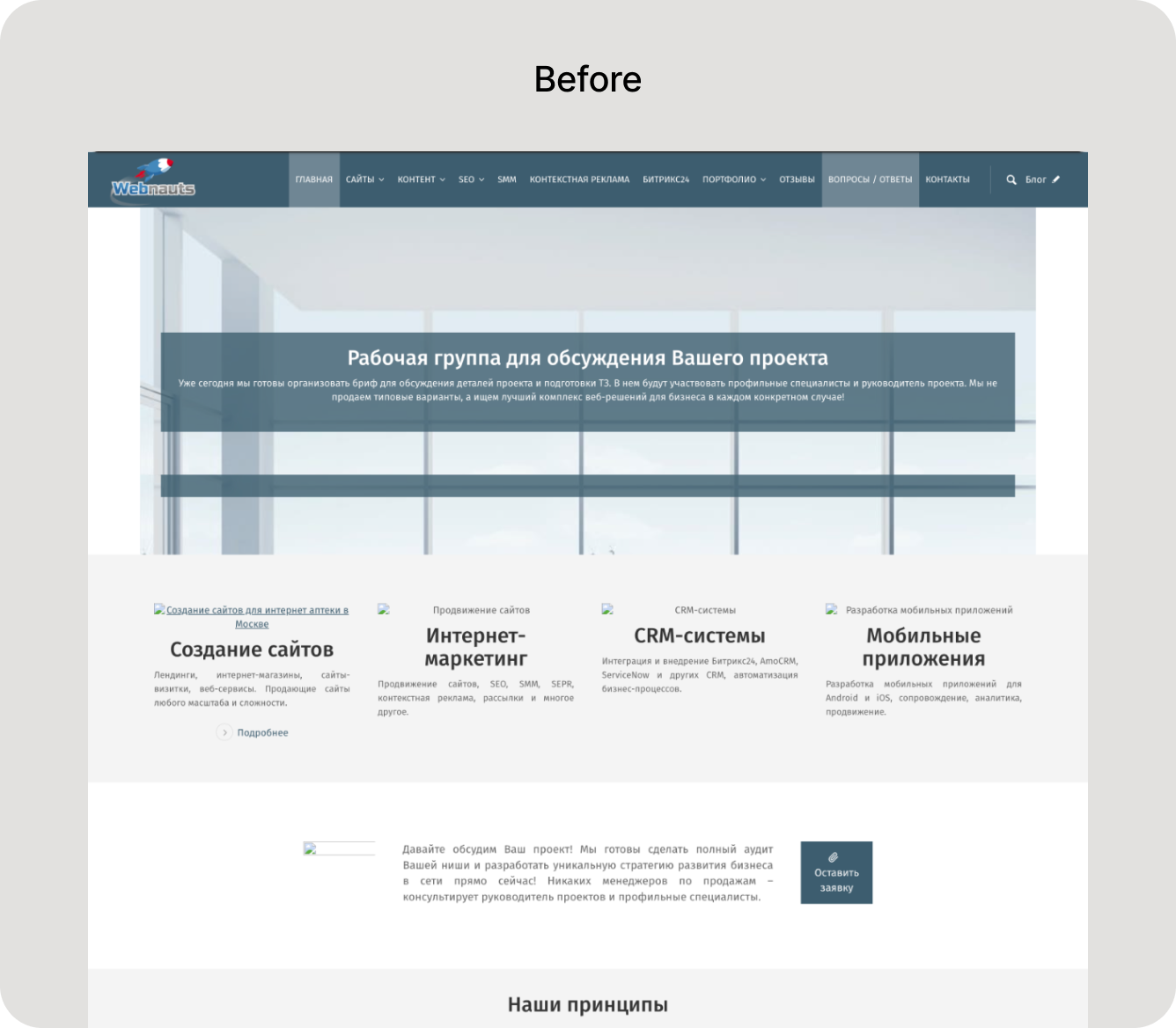
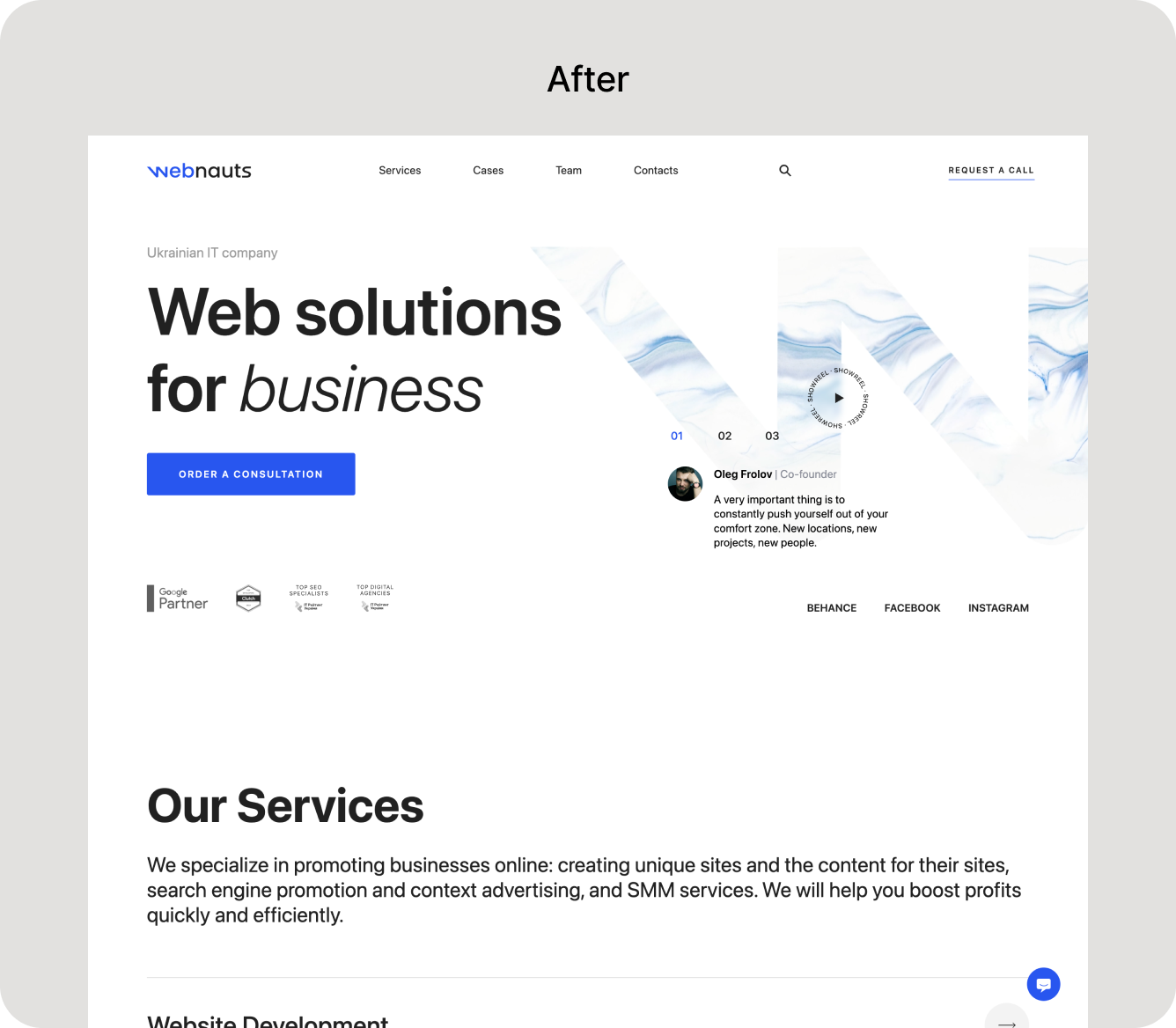
- Outdated brand identity no longer matched Webnauts’ growth strategy.
- No internal design processes; quality and speed depended on a single designer (me).
- Talent shortage slowed delivery and limited service offerings.
- Company wanted to launch an educational initiative but lacked curriculum & mentors.
Internal Analysis
- Stakeholder interviews revealed inconsistent messaging across 8 customer‑facing touchpoints.
- Design audit showed 27 conflicting color / type combos in production.
- Capacity review exposed a 4‑week backlog on every new project request.
- Culture survey signaled low understanding of design value in non‑design teams.
Solution
- Strategic Rebrand:
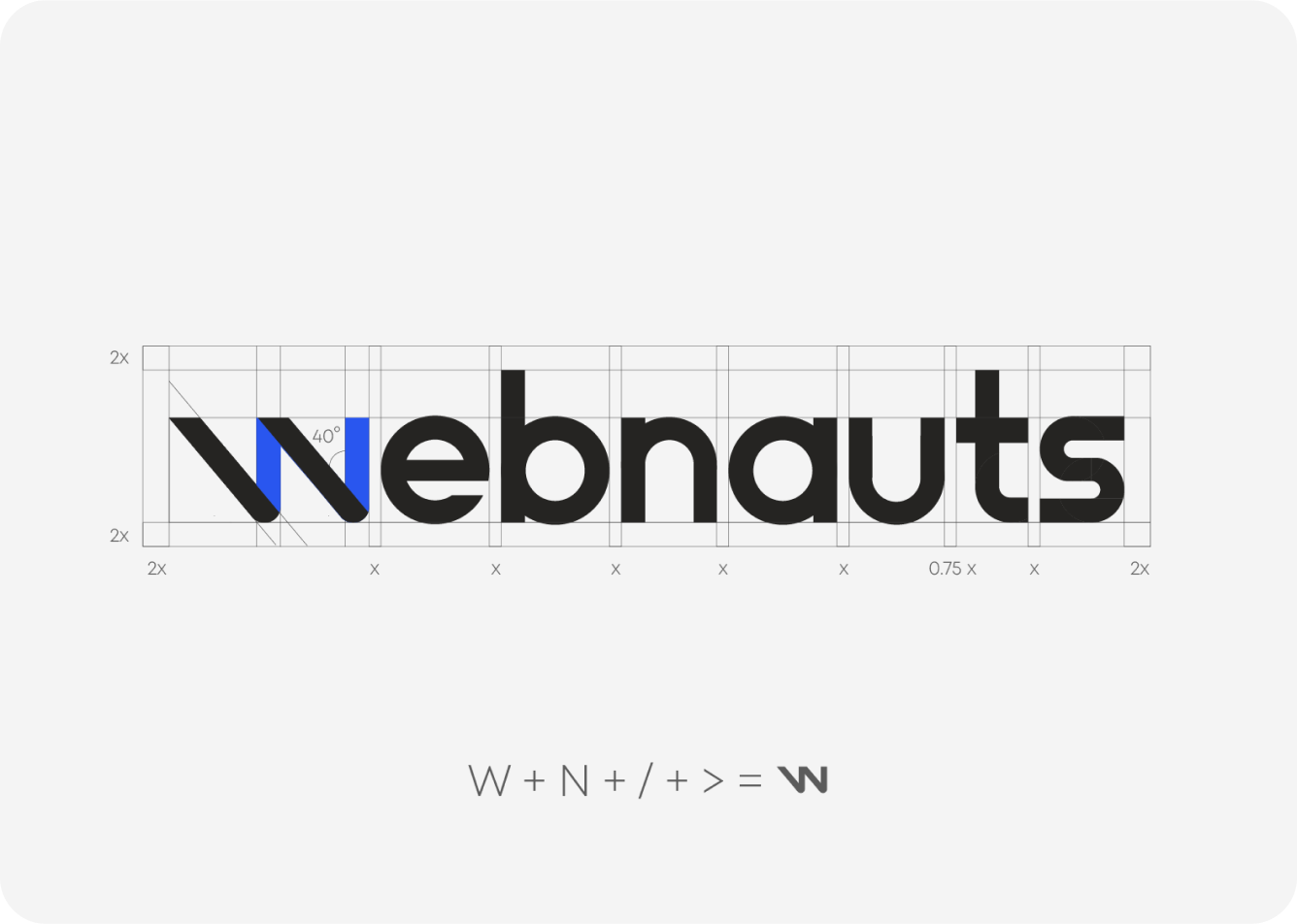
- Led full visual refresh - logo, color palette, typography, motion animation, voice guidelines.
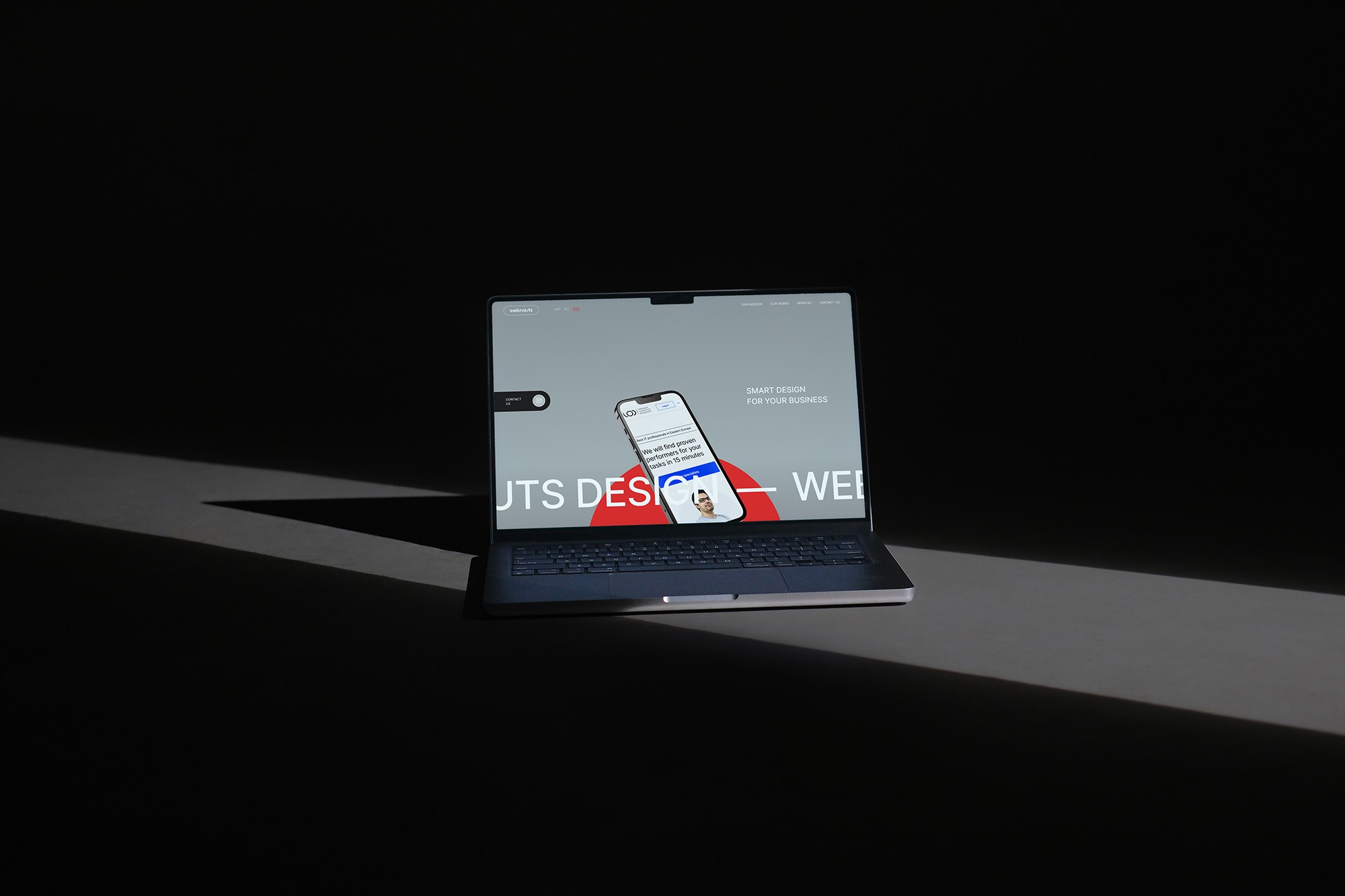
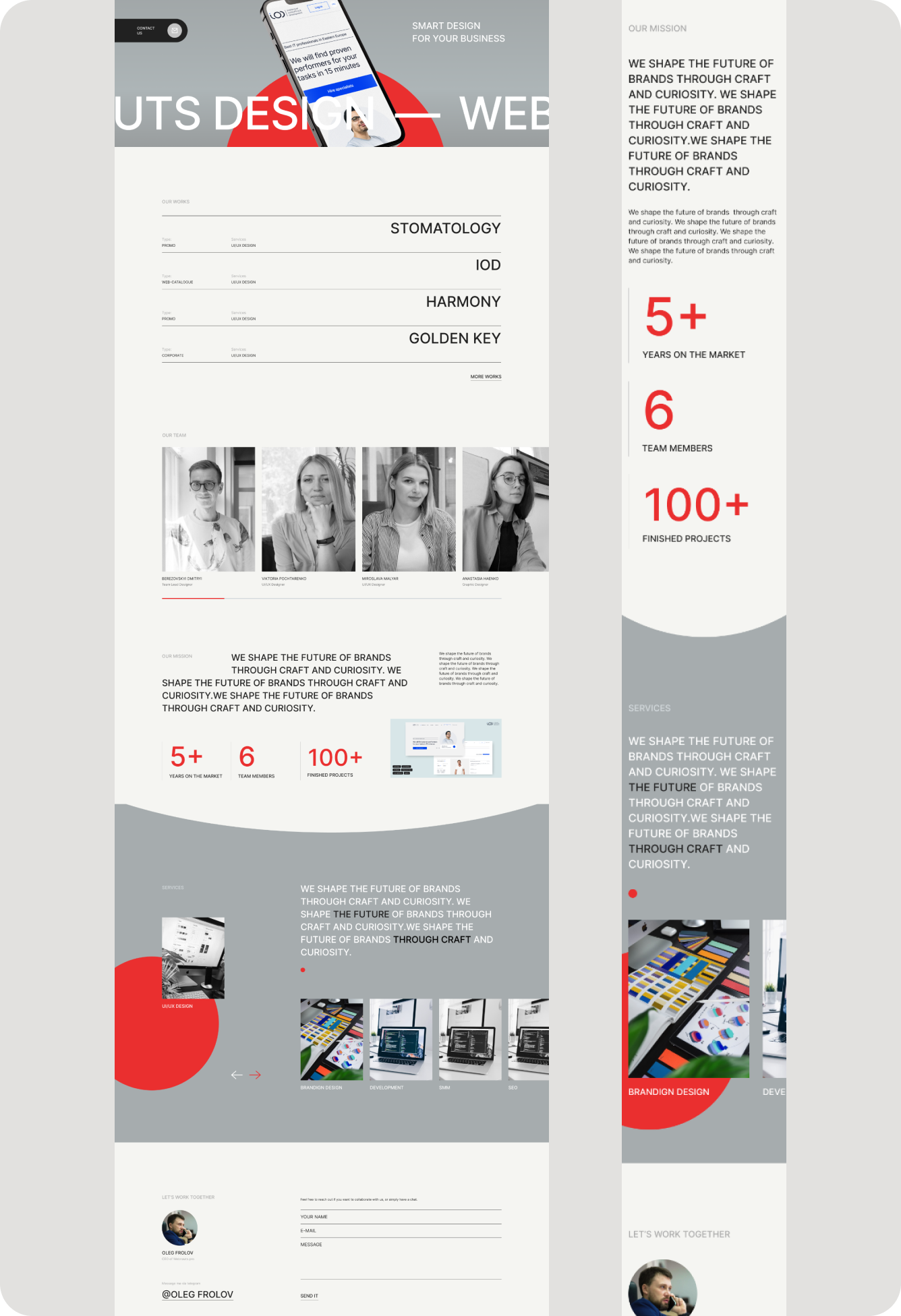
- Create a separate website for design-centered approach of promoting services.
- Design Team Creation & Leadership
- Hired & mentored 3 UI/UX, 2 graphic, 1 motion designers.
- Set up onboarding, bi-weekly 1-on-1's, and OKR‑driven performance tracking.
- Process Architecture:
- Built a feedback loop with PM & engineering → cut hand‑off time by 40 %.
- Cross‑functional Product Design
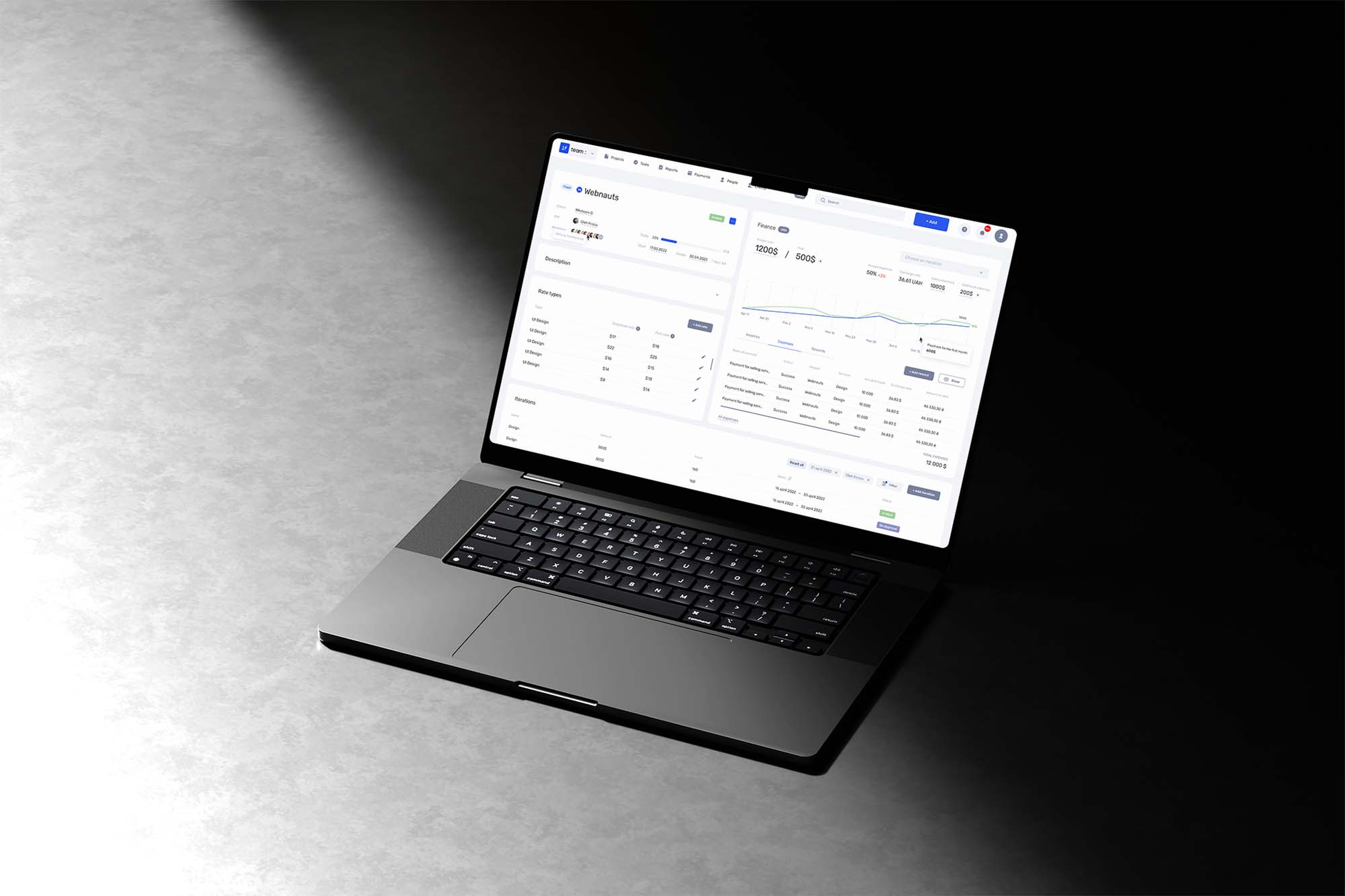
- Ran user research, wire‑framed new features, and paired with devs to ship products.
- Embedded designers in growth, marketing, and sales squads.
- UI/UX Education Initiative
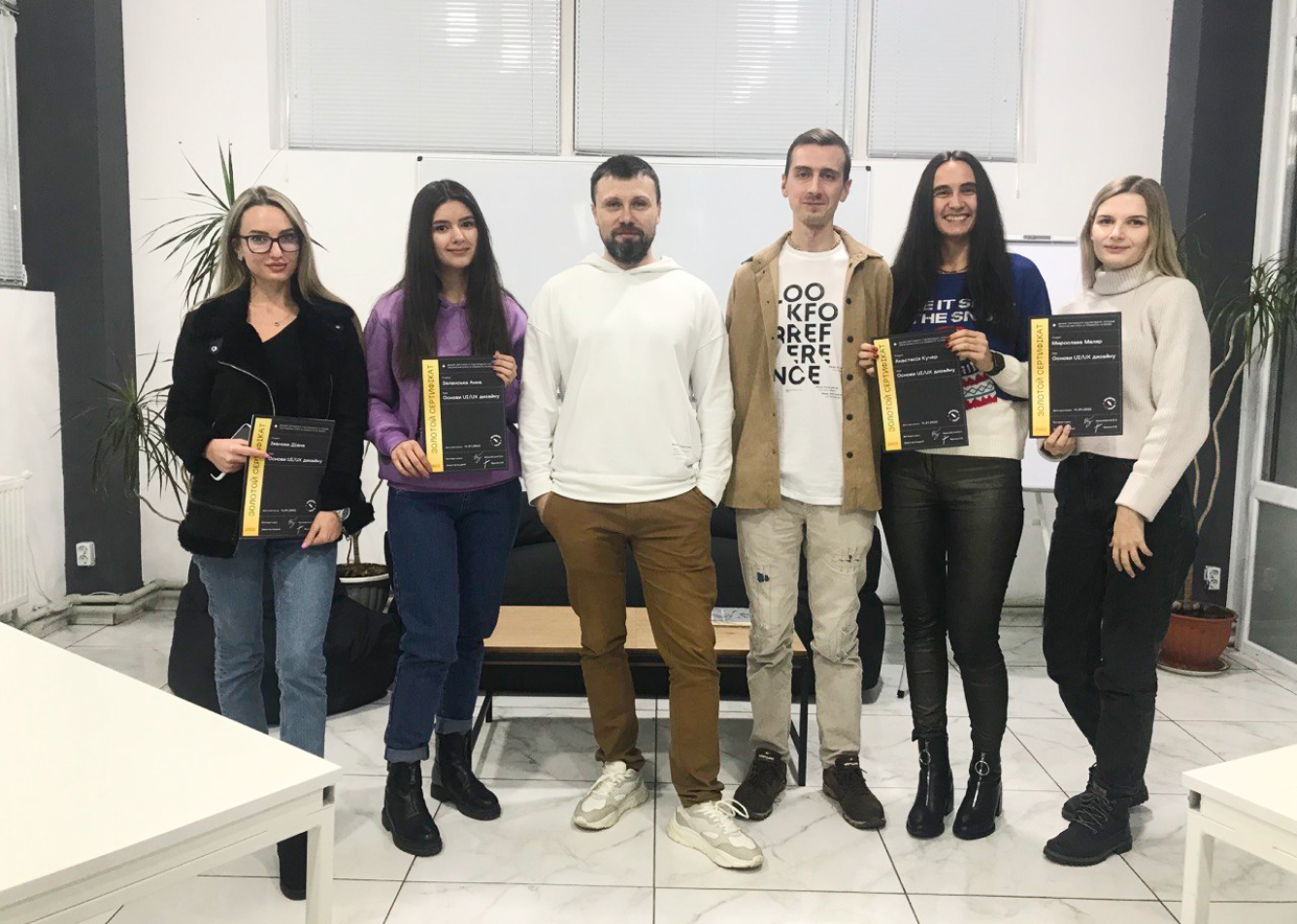
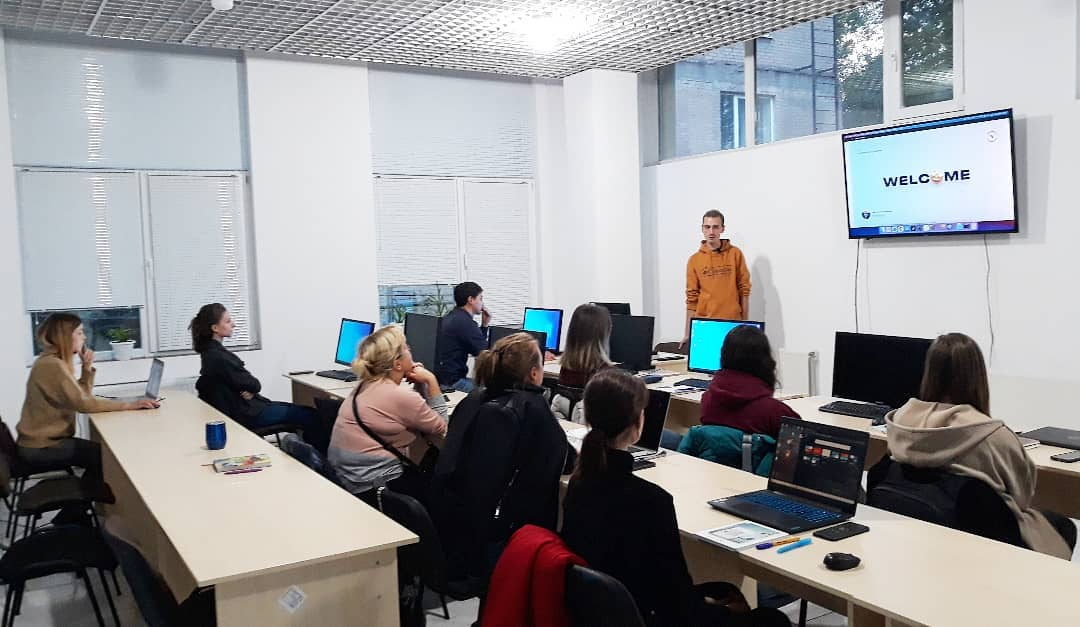
- Authored & taught a 12‑week UI/UX course (lectures, workshops, hometasks).
- Best graduates hired directly into the design team.
- Office Interior Design ( lol )
- Designed collaborative workspace to mirror the new brand and foster creative culture.
Results
Options 1 and 2 were slick and interactive, but five quick hallway tests exposed a problem: prospects spent more time fiddling with controls than understanding value. The simplest design - Option 3 - won every clarity checkpoint (“I get it immediately” in 4 / 5 sessions) and needed almost no engineering effort.
Engineering spent just 14 hours swapping the old grid for the new two‑plan layout, neutralising the palette, and adding a sticky bar.
8 weeks post‑launch, booked calls had more than 2x, bounce rate fell by 3x, and the booking form took less than 3 minutes to finish.
Take away
In product design the mission is to remove obstacles and deliver value - whether that means refactoring a user flow or, when the problem demands it, redesigning the very space the team works in.


Previous
project
Next project

Let's create something
awesome
together


Scaling design culture: from solo designer to thriving product design team
Client:
Webnauts
My role:
Product Designer → Design Lead
Team:
6 Designers (UI/UX ×3, Graphic ×2, Motion ×1) · PM · Developers · Marketing
Duration:
2 years
Design impact
Metric
Year 0 (Before*)
Year 2 (After)
Impact
Operating‑profit index*
1.0
3.0
≈ ×3
Company headcount
15
60
300 %
Designer headcount
1
6
500 %
Parallel projects per quarter
3
15
×4
* Index: profit in Year 0 is set to 1; subsequent values show multiples of that baseline (confidential absolute figures withheld).
Problem
- Outdated brand identity no longer matched Webnauts’ growth strategy.
- No internal design processes; quality and speed depended on a single designer (me).
- Talent shortage slowed delivery and limited service offerings.
- Company wanted to launch an educational initiative but lacked curriculum & mentors.
Internal Analysis
- Stakeholder interviews revealed inconsistent messaging across 8 customer‑facing touchpoints.
- Design audit showed 27 conflicting color / type combos in production.
- Capacity review exposed a 4‑week backlog on every new project request.
- Culture survey signaled low understanding of design value in non‑design teams.
Solution
- Strategic Rebrand:
- Led full visual refresh - logo, color palette, typography, motion animation, voice guidelines.
- Create a separate website for design-centered approach of promoting services.
- Design Team Creation & Leadership
- Hired & mentored 3 UI/UX, 2 graphic, 1 motion designers.
- Set up onboarding, bi-weekly 1-on-1's, and OKR‑driven performance tracking.
- Process Architecture:
- Built a feedback loop with PM & engineering → cut hand‑off time by 40 %.
- Cross‑functional Product Design
- Ran user research, wire‑framed new features, and paired with devs to ship products.
- Embedded designers in growth, marketing, and sales squads.
- UI/UX Education Initiative
- Authored & taught a 12‑week UI/UX course (lectures, workshops, hometasks).
- Best graduates hired directly into the design team.
- Office Interior Design ( lol )
- Designed collaborative workspace to mirror the new brand and foster creative culture.
Results
- Designers save ≈2 days per sprint via reusable components.
- Devs cut CSS bloat by ≈30 %, shipping faster and with fewer regressions.
- Internal audits show 95 % visual consistency and full WCAG 2.1 AA compliance.
- Leadership notes a “cohesive, trustworthy” brand presence across all touchpoints.
Take away
In product design the mission is to remove obstacles and deliver value - whether that means refactoring a user flow or, when the problem demands it, redesigning the very space the team works in.
Previous project
Next project
Let's create something
awesome
together
Scaling design culture: from solo designer to thriving product design team
Client:
Webnauts
My role:
Product Designer → Design Lead
Team:
6 Designers (UI/UX ×3, Graphic ×2, Motion ×1) · PM · Developers · Marketing
Duration:
2 years
Design impact
Metric
Year 0 (Before*)
Year 2 (After)
Impact
Operating‑profit index*
1.0
3.0
≈ ×3
Company headcount
15
60
300 %
Designer headcount
1
6
500 %
Parallel projects per quarter
3
15
×4
* Index: profit in Year 0 is set to 1; subsequent values show multiples of that baseline (confidential absolute figures withheld).
Problem
- Outdated brand identity no longer matched Webnauts’ growth strategy.
- No internal design processes; quality and speed depended on a single designer (me).
- Talent shortage slowed delivery and limited service offerings.
- Company wanted to launch an educational initiative but lacked curriculum & mentors.
Internal Analysis
- Stakeholder interviews revealed inconsistent messaging across 8 customer‑facing touchpoints.
- Design audit showed 27 conflicting color / type combos in production.
- Capacity review exposed a 4‑week backlog on every new project request.
- Culture survey signaled low understanding of design value in non‑design teams.
Solution
- Strategic Rebrand:
- Led full visual refresh - logo, color palette, typography, motion animation, voice guidelines.
- Create a separate website for design-centered approach of promoting services.
- Design Team Creation & Leadership
- Hired & mentored 3 UI/UX, 2 graphic, 1 motion designers.
- Set up onboarding, bi-weekly 1-on-1's, and OKR‑driven performance tracking.
- Process Architecture:
- Built a feedback loop with PM & engineering → cut hand‑off time by 40 %.
- Cross‑functional Product Design
- Ran user research, wire‑framed new features, and paired with devs to ship products.
- Embedded designers in growth, marketing, and sales squads.
- UI/UX Education Initiative
- Authored & taught a 12‑week UI/UX course (lectures, workshops, hometasks).
- Best graduates hired directly into the design team.
- Office Interior Design ( lol )
- Designed collaborative workspace to mirror the new brand and foster creative culture.
Results
Options 1 and 2 were slick and interactive, but five quick hallway tests exposed a problem: prospects spent more time fiddling with controls than understanding value. The simplest design - Option 3 - won every clarity checkpoint (“I get it immediately” in 4 / 5 sessions) and needed almost no engineering effort.
Engineering spent just 14 hours swapping the old grid for the new two‑plan layout, neutralising the palette, and adding a sticky bar.
8 weeks post‑launch, booked calls had more than 2x, bounce rate fell by 3x, and the booking form took less than 3 minutes to finish.
Take away
In product design the mission is to remove obstacles and deliver value - whether that means refactoring a user flow or, when the problem demands it, redesigning the very space the team works in.
Previous project
Next project
Let's create something
awesome
together